Beijing Road Pedestrian Street
Vibrant Commercial Hub & Millennia-Old History
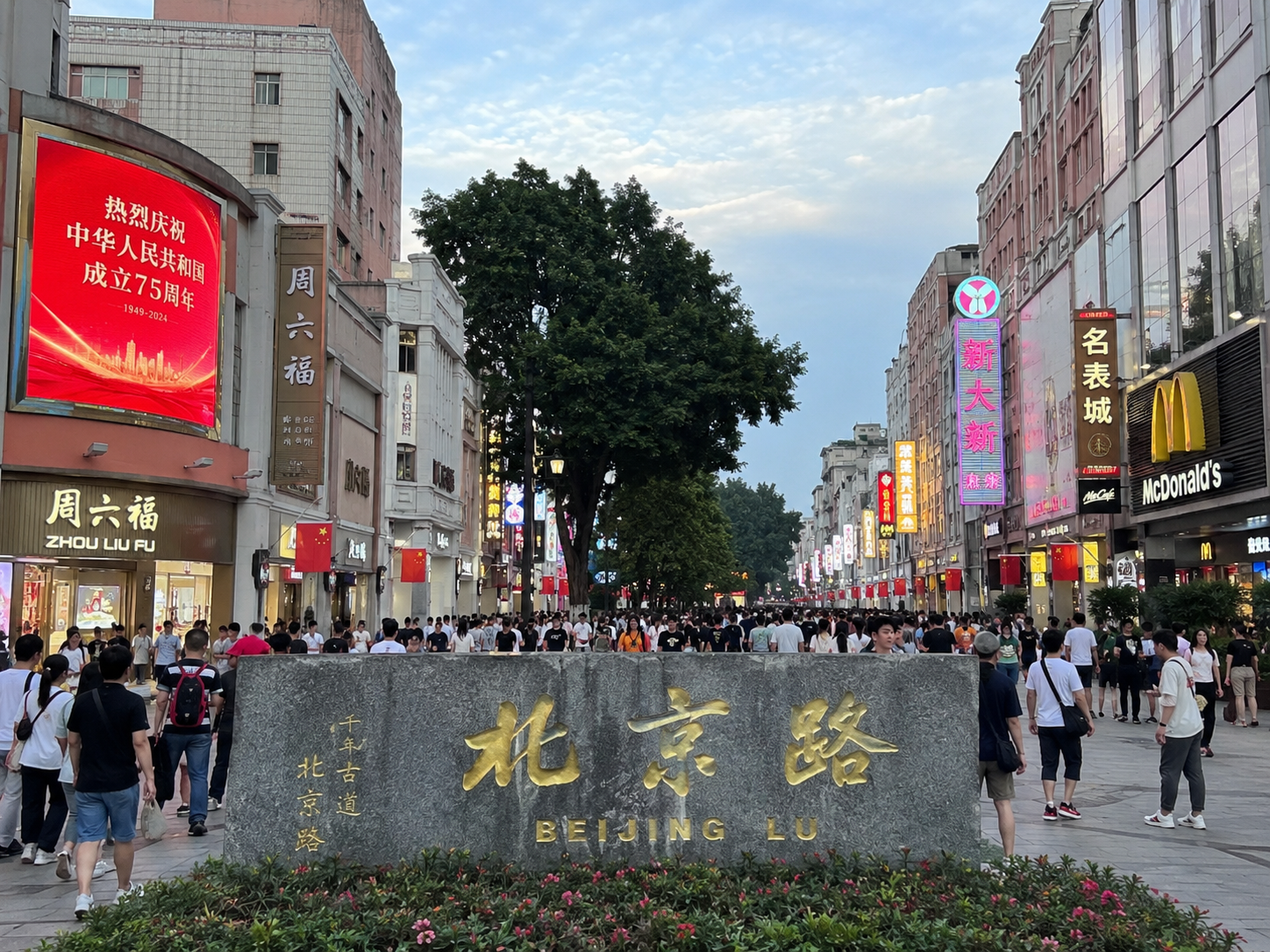
Overview
Beijing Road is basically Guangzhou's main stage, and honestly, I could have spent days here just soaking it all in. It's the city's premier pedestrian shopping street, packed with everything from massive international brands to tiny traditional boutiques that look like they haven't changed in decades. But here's what completely blew my mind: right in the middle of all this modern chaos, there are layers of ancient road ruins dating back to the Song, Yuan, Ming, and Qing Dynasties, preserved under protective glass directly beneath your feet. I literally stopped in the middle of the street and stared down at thousand-year-old cobblestones while people flowed around me like I was a rock in a river.
Walking Beijing Road feels like time travel, no exaggeration. Above ground, you've got international fashion brands next to traditional Chinese medicine shops, shiny electronics stores beside century-old snack stalls. But the real magic? Look down. Through those glass panels in the pavement, you can literally see the road foundations that have supported over a thousand years of commerce and daily life. I must have spent twenty minutes just crouching over different sections, trying to wrap my head around the fact that people walked these same stones a millennium ago.
This wild combination of ancient history and modern commerce is exactly what makes Beijing Road so addictive. The street has been a commercial center for literally 1,000 years, which is just... how do you even process that? Whether you're here to shop, geek out over history, admire the architecture, or just people-watch with a bubble tea in hand, Beijing Road somehow delivers on all of it. It's the essence of Guangzhou, past and present, layered on top of each other.
Essential Info
- Hours: The street is open 24/7, but most shops operate from 10:00 to 22:30. It truly comes alive after 18:00 when the neon signs light up.
- Tickets: Fully free to explore.
- Transport: Take Metro Line 1 or Line 2 to "Gongyuanqian Station", or Line 6 to "Beijing Lu Station".
💡 Local Pro-Tip
Okay, first things first: those glass panels in the center of the walkway? Don't just glance at them. Really look. I mean get down close (without blocking traffic) and study those cobblestones. Those are active archaeological excavation windows, and you're literally looking at the same stones people walked on a thousand years ago. It still gives me chills thinking about it. And here's another thing I learned the hard way: skip the big chain restaurants on the main strip. I made that mistake on my first visit and had a thoroughly mediocre meal. Instead, duck into the narrow side alleys. That's where you'll find the real gems—tiny stalls serving traditional rice noodle rolls (Changfen) and sweet dessert soups (Tong Sui) that will make you understand why Guangzhou is famous for its food.
Historical Significance
I'm going to geek out for a minute here because this is genuinely incredible. The archaeological discoveries under Beijing Road are considered one of the most important urban archaeological finds in all of China. When they excavated, they found road layers from different dynasties stacked on top of each other like some kind of historical layer cake. The oldest sections go back to the Southern Song Dynasty (1127-1279 AD). Standing there looking at those layers, I could almost see the centuries unfolding—each one representing another era of people living, trading, and walking these same streets.
This road was part of Guangzhou's ancient city grid, which was apparently one of the most advanced urban planning systems of its time. The cobblestones, drainage systems, and building foundations tell us so much about daily life, trade practices, and architectural techniques from centuries ago. But what really struck me was the continuity—this spot has been a commercial hub for over a thousand years without interruption. That's not just history; that's living history. You're walking on the same commercial artery that merchants used during the Song Dynasty. How cool is that?
Shopping Highlights
Department Stores
If you're in the mood for some serious shopping, Beijing Road has you covered. Grandbuy Department Store and New World Department Store are the big players here, with all the international and domestic brands you'd expect. I wandered through Grandbuy mostly to escape the heat for a bit, but ended up finding some great cosmetics that were way cheaper than back home. Win-win.
Traditional Shops
But honestly? The traditional shops are where my heart is. Scattered all along the street are these old-school establishments selling Chinese medicine, teas, handicrafts, and cultural products. Some of them have apparently been in the same location for generations. I bought some tea from a shop where the owner told me his grandfather had sold the same blends. That's the kind of authenticity you can't fake, and it's exactly what makes Beijing Road special.
Snack Streets
Okay, the side alleys branching off Beijing Road are where I did my best eating. These narrow lanes are packed with food stalls and tiny restaurants serving traditional Cantonese snacks, fresh fruit, and local specialties that have been sold here for decades. I found this one stall making fresh egg waffles that I still dream about. Follow your nose, trust the lines of locals, and prepare to eat way more than you planned.
Electronics and IT
The eastern end of Beijing Road is electronics central. Mobile phones, computers, digital accessories—you name it, they've got it. I didn't buy anything here since I was traveling light, but I chatted with a few tech enthusiasts who told me this is prime territory for bargain hunters. If you know what you're looking for and aren't afraid to haggle a bit, you can apparently score some great deals.
What to See and Do
Archaeological Windows
I know I keep mentioning these, but seriously—don't just walk past them. The most significant sections are near the middle of the pedestrian street, and there are information plaques in both Chinese and English that explain what you're looking at. I read every single one and still felt like I only scratched the surface. Each layer represents a different dynasty, a different era of Guangzhou's history. It's like reading the city's diary through its roads.
Traditional Architecture
Keep your eyes up as you walk, because the architecture here tells its own story. I started noticing how some buildings blend traditional qilou (arcade houses) with super modern designs. It's this visual representation of Guangzhou's evolution that you don't get in guidebooks. I found myself taking photos of building facades like some kind of architecture nerd, and honestly, I have zero regrets. The contrast is beautiful.
Street Performances
Evenings on Beijing Road are when the street comes alive with performers. I stumbled upon a traditional opera singer one night and ended up watching for twenty minutes, completely mesmerized. There are also musicians and dancers who set up along the pedestrian area. These aren't polished tourist shows—they're real local talent sharing their culture, and that makes them so much more special.
Night Market
After dark, parts of Beijing Road transform into this vibrant night market that honestly felt like a different world. Stalls selling everything from clothing and accessories to souvenirs and street food light up the street. I went on a Friday night and the energy was absolutely electric. If you want to feel the pulse of Guangzhou's nightlife, this is where you need to be. Just keep an eye on your belongings in the crowds.
Food Experiences
If you know me, you know I plan my trips around food, and Beijing Road did not disappoint. This place is a straight-up food lover's paradise. You've got everything from quick street snacks to full sit-down meals, with traditional Cantonese dim sum restaurants, noodle shops, and dessert stalls filling every alley. I ate my way through this street over three days and still felt like I missed things.
Here are the absolute must-tries:
- Changfen (肠粉): These steamed rice noodle rolls, usually filled with shrimp or beef, are silky perfection. I had them from a tiny stall in a side alley and they ruined me for anywhere else.
- Tong Sui (糖水): Sweet dessert soups that are basically a Cantonese art form. I tried the red bean version and immediately understood why locals are obsessed.
- Lamian (拉面): Hand-pulled noodles in rich broths that will warm your soul. Watching the chef pull the noodles is half the entertainment.
- Bak Kut Teh (肉骨茶): Pork rib soup that's a local favorite for good reason. The peppery broth is addictive.
- Egg Tarts: Portuguese-inspired but perfected in Guangzhou. Flaky, creamy, and dangerously easy to eat three in a row. Not that I did that. Okay, I definitely did.
Here's my honest advice: skip the main street restaurants with picture menus and follow the locals into the side streets. That's where the real magic happens. I found this hole-in-the-wall place with plastic stools and a line out the door that served the best wonton noodles I've ever had. The best food at the best prices is always where the locals are eating. Trust me on this one.
Best Times to Visit
Daytime (10:00-17:00): If you want to actually see the archaeological sites clearly and do some serious shopping, daytime is your best bet. The natural light makes those ancient road layers way easier to appreciate, and it's less crowded in the early morning. I did a morning walk once and practically had the glass panels to myself.
Evening (18:00-22:00): This is when Beijing Road transforms. The neon signs flicker on, street performers appear out of nowhere, and the whole street takes on this electric energy. I spent one evening just walking back and forth, people-watching with a bubble tea, and honestly had the time of my life. If you only have one shot at this street, make it an evening visit.
Weekdays: Less crowded, easier to navigate, better for photos without a million people in your shot. Weekends, especially during holidays, can be absolutely packed. I went on a Saturday afternoon once and it was shoulder-to-shoulder in some sections. Fun, but exhausting.
Practical Tips
- Comfortable Shoes: The street is pedestrian-only but LONG. I made the mistake of wearing cute but uncomfortable shoes on my first visit and my feet were screaming by hour two. Learn from my pain.
- Weather Protection: There are some covered sections, but Guangzhou weather can be unpredictable. I got caught in a sudden downpour once and was very grateful for the compact umbrella I'd shoved in my bag.
- Bargaining: Most shops have fixed prices, but the smaller street vendors might be open to a little friendly negotiation. I didn't haggle much, but my friend scored some great deals on souvenirs by being charming and persistent.
- Payment: Most places take WeChat Pay or Alipay, but keep some cash for the small vendors and food stalls. I ran into a couple of places that were cash-only, and I was glad I had some yuan on me.
- Security: Like any busy shopping area anywhere in the world, keep an eye on your stuff. I didn't have any issues, but I also kept my bag zipped and in front of me in the thickest crowds. Better safe than sorry.