Chen Clan Ancestral Hall
The Pinnacle of Lingnan Architectural Art & Craftsmanship
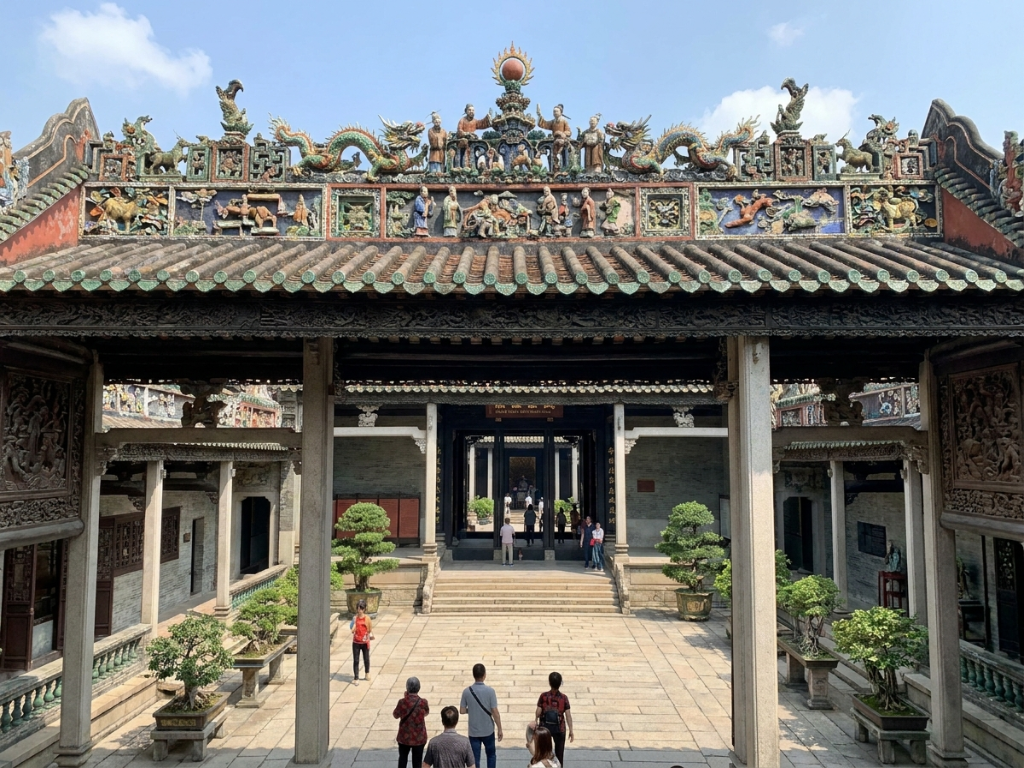
Overview
Honestly, the Chen Clan Ancestral Hall completely blew me away. I walked in thinking I'd spend an hour tops, and ended up lingering for nearly three. Built in the late 19th century, this place is hands-down the most jaw-dropping example of traditional Lingnan architecture I've ever seen. The woodcarvings, stone carvings, brick carvings, and those incredible pottery ridge crests—trust me, you've never seen craftsmanship like this. If you want to truly "get" Guangdong culture, put this at the very top of your list.
Here's the thing that really got me: this wasn't just built to look pretty. Between 1888 and 1894, Chen clan members from 72 different villages pooled their money to create something that served two purposes—a place to honor their ancestors AND a prep academy for students taking imperial exams. You can literally feel the ambition in every beam and bracket. Standing in those courtyards, I kept imagining the students who once studied here, and the artisans who poured their souls into every carving. The craftsmanship is on another level.
These days, the hall also houses the Guangdong Folk Art Museum, which keeps the place buzzing with real cultural energy. I found myself going down rabbit holes everywhere—one minute I'd be staring at a wood carving of some scene from classical literature, the next I'd be craning my neck at the ceramic sculptures on the roof ridges. And here's my confession: every time I looked up, I spotted something new. The detail is absolutely insane. You'll want to bring a camera with a good zoom lens, trust me on this.
Essential Info
- Hours: 09:00 - 17:30
- Tickets: 10 RMB
- Transport: Take Metro Line 1 or Line 8 to "Chen Clan Academy Station" (Exit D is right at the entrance plaza).
The Three Carvings and Two Sculptures
So here's what everyone's talking about when they mention this place—the legendary "three carvings" and "two sculptures." I honestly didn't fully appreciate what that meant until I saw them in person. These aren't just decorations; they're the absolute pinnacle of Cantonese decorative arts, and once you know what to look for, you'll be spotting details everywhere.
Wood Carvings
Let me tell you about the wood carvings—they're absolutely mind-blowing. I'm talking scenes from classical literature, historical events, and all these auspicious symbols that I had to Google later. But what really got me was the latticework on the windows and doors. As the light shifts throughout the day, the shadows create these incredible patterns that basically turn the whole hall into a living art piece. I spent way too long photographing the same window at different angles. No regrets though.
Stone and Brick Carvings
The stone carvings around the entrance gates and foundation stones are another level of detail. I'm not usually someone who gets excited about bricks, but the geometric designs and protective symbols on the exterior walls genuinely fascinated me. A local I met told me each motif carries meaning related to family prosperity and protection. It made me realize nothing here is random—every element was chosen with intention and care.
Ceramic and Iron Sculptures
Okay, the ceramic sculptures on the roof ridges? These were my absolute favorite. The colorful figures depict historical characters, mythical creatures, and symbols meant to bring good fortune. I must have taken fifty photos just of the roofline. And don't sleep on the iron sculptures either—the decorative gate hardware and roof ornaments show how traditional Chinese architecture perfectly balances beauty with practicality. Honestly, it's this attention to both form and function that makes the whole place so special.
Cultural Significance
Here's something I didn't fully grasp until I spent a few hours wandering around—this place isn't just beautiful, it's basically a textbook on traditional Guangdong society. The layout follows Confucian principles of order and hierarchy, and once someone pointed it out to me, I could see how each space had its own specific purpose. This area was for ancestral worship, that area was for studying, another was for community gatherings. It all clicks into place.
The museum inside does an incredible job of keeping traditional Cantonese culture alive. I'm talking folk art, traditional costumes, ceremonial objects, and everyday items that gave me a real sense of what life was like back then. If you're lucky, you might catch one of the cultural performances in the courtyards. I stumbled upon a traditional music session during my visit, and honestly, it was one of those travel moments that gives you goosebumps. Check the schedule when you arrive—you won't regret it.
What to Explore
Main Hall
The central hall is where I spent the most time just standing and staring upward. The high ceilings and elaborate wood carvings create this almost overwhelming sense of grandeur. This was where the most important ancestral ceremonies happened, and honestly, you can still feel that spiritual weight in the air. It's the kind of place that makes you whisper without even realizing it.
Sideways Halls
Don't skip the smaller halls around the main courtyard—they're packed with exhibitions on Lingnan culture that I found surprisingly engaging. I'm talking traditional costumes, folk art, and historical artifacts that actually helped me understand what daily life in Guangdong looked like centuries ago. One display of traditional wedding garments genuinely stopped me in my tracks. The craftsmanship was unreal.
Courtyards
The courtyards were my favorite spots to just breathe and reset. Each one has its own personality and unique architectural details. I found myself hopping from courtyard to courtyard, noticing how the light changed, how the shadows fell differently, how each space felt distinct. Bring a bottle of water, find a stone bench, and just sit for a while. You'll notice things you missed when you were walking.
Ridge Crests
I know I keep harping on about the roof ridges, but seriously—don't miss them. These pottery sculptures aren't just pretty decorations. They tell stories, they supposedly protect the building, and they represent the absolute best of what Cantonese craftsmen could achieve. I got neck cramps from looking up so much, and it was 100% worth it. You'll love discovering the little narratives woven into each figure.
Best Time to Visit
If you can swing it, get there between 9:00 and 11:00 AM. The morning light filtering through those courtyards creates the most gorgeous shadows, and honestly, the photos I took during golden hour are some of my favorites from the whole trip. Plus, you'll beat the tour groups, which is always a win in my book.
Weekdays are definitely your friend here. I went on a Tuesday morning and practically had the place to myself for the first hour. A friend of mine visited on a Saturday and said it felt like a completely different experience—still beautiful, but way more crowded. If weekends are your only option, do yourself a favor and arrive right at 9:00 AM when the doors open.
The hall is open year-round, but here's my honest take: spring (March-May) and autumn (September-November) are the sweet spots. Summer in Guangzhou is no joke—hot, humid, and basically guaranteed to make you sweat through your shirt. I visited in late April and the weather was perfect. Just bring water regardless of when you go, trust me.
Nearby Attractions
One thing I love about this spot is that it's right in the heart of Liwan District, so you're surrounded by other amazing places to explore. Here's what I'd recommend pairing with your visit:
- Shamian Island: Just a 15-minute walk away, and honestly, the contrast is wild. You go from traditional Lingnan architecture to colonial European buildings in minutes. I did both in one morning and it felt like time travel.
- Enning Road (恩宁路): This traditional street with its Qilou architecture and local shops is perfect for a post-visit stroll. I grabbed some amazing street snacks here that hit the spot after all that walking.
- Liwan Lake: If you need somewhere peaceful to decompress after the sensory overload of the hall, this park with its traditional Chinese gardens is exactly what the doctor ordered.
- Shisanling Medicine Market: For something completely different, check out this traditional Chinese medicine market nearby. The smells alone are an experience.