Lychee Bay
Traditional Cantonese Water Town & Legendary Local Snacks
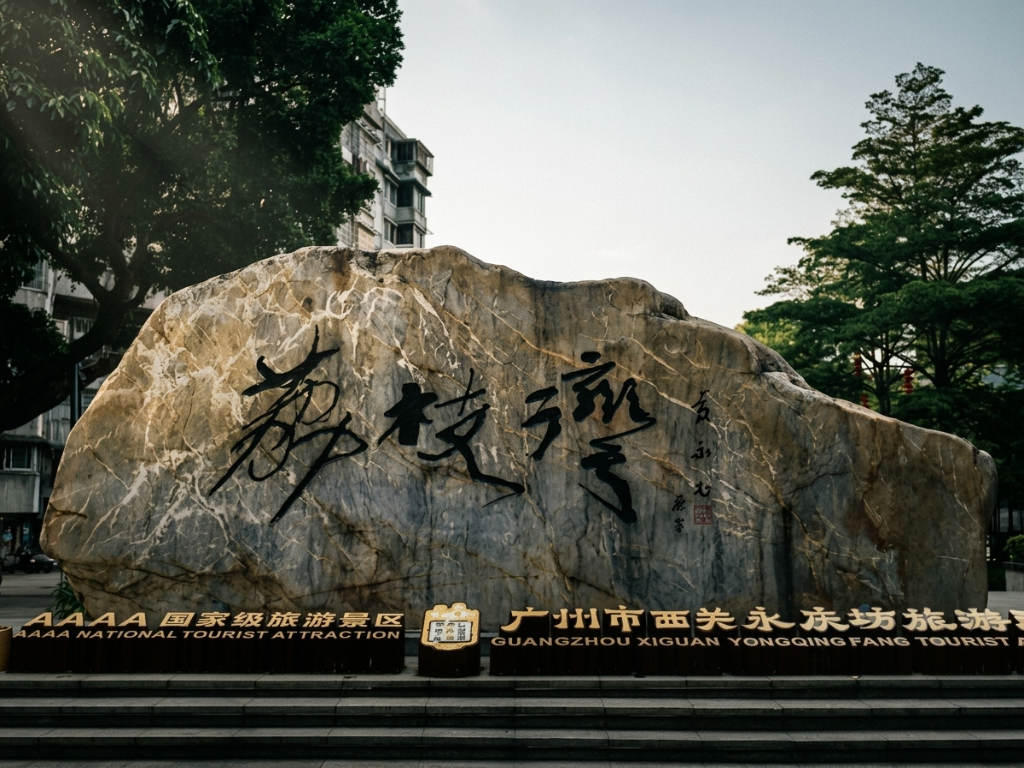
Overview
Lychee Bay is the kind of place that makes you forget you're in a massive modern city. Located in historic Liwan District, this spot offers a genuine glimpse into Guangzhou's past as a traditional southern Chinese water town. I'm talking ancient weeping banyan trees dipping their branches into the water, historic stone bridges that look like they've been there forever, and classic Xiguan mansions that make you feel like you've stepped into a period drama. The pace here is slow, the atmosphere is deeply authentic, and honestly? It was exactly what I needed after a few days of city chaos.
The name comes from the area's history as a lychee cultivation region—these orchards once supplied the imperial court during the Tang Dynasty. Today, you won't see quite as many lychee trees, but the tranquil waterside charm is absolutely intact. I met a local elderly man who told me he's been coming here every morning for forty years to practice Tai Chi. When I asked why, he just smiled and said, "It hasn't changed much." I totally understood what he meant.
What I loved most is that Lychee Bay isn't just a tourist setup—it's a real living community where people go about their traditional daily routines. The narrow canals, ancient bridges, and traditional wooden boats create this scene that feels genuinely frozen in time. Walking along the water, I kept thinking about how this was once a major commercial waterway, how merchants and boats passed through here for centuries. It's a window into Guangzhou's maritime past that you can still touch and feel.
Essential Info
- Hours: The scenic area is open 24/7. Traditional boat rides typically operate from 09:00 to 18:00.
- Tickets: Fully free to walk around. A ride on a traditional wooden boat costs around 50 RMB.
- Transport: Take Metro Line 5 to "Zhongshanba Station" (Exit A) and take a 10-minute walk through the local Pantang neighborhood, or take Line 1 to "Changshou Lu Station".
💡 Local Pro-Tip
I cannot stress this enough: come here HUNGRY. Like, skip breakfast hungry. This neighborhood is basically the birthplace of so many famous Cantonese snacks, and you'll want to try everything. Look for the local vendors selling "Tingzai Zhou" (Boat Congee) and "Ma Ti Gao" (Water Chestnut Cake)—both are local legends for good reason. And here's my favorite move: buy a bunch of snacks, find a traditional wooden boat, and eat while slowly floating down the canal. It's the most Lingnan experience you can possibly have, and honestly? It was one of the best afternoons of my whole trip.
Historical Significance
I'm a total history nerd, so bear with me, but Lychee Bay's story is genuinely fascinating. This place dates back over a thousand years, when it was part of Guangzhou's extensive canal system connecting the city to the Pearl River. During the Tang Dynasty (618-907), the imperial court actually established a special lychee plantation here specifically to supply the emperor's favorite fruit. That's how important this area was. Standing by the water, I tried to imagine boats carrying lychees to the imperial palace and honestly got a little dizzy thinking about the history.
By the Qing Dynasty, Lychee Bay had evolved into a prosperous commercial hub with docks, warehouses, and trading houses everywhere. The wealthy merchants built those elegant Xiguan mansions with their distinctive narrow facades—apparently designed that way to save on taxes—but incredibly deep interiors. I toured one of the preserved mansions and the layout is so clever. From the street it looks modest, but inside it just keeps going. That practical-meets-beautiful approach is so typically Lingnan, and I loved learning about it.
Scenic Highlights
Ancient Weeping Banyan Trees
These trees are what you'll remember long after you leave. The ancient weeping banyans lining the canal banks are the most iconic feature of Lychee Bay—some are over 200 years old, which absolutely blows my mind. Their long branches create this natural canopy over the water, dipping gracefully into the canal like they're trying to touch their own reflection. I visited at sunset and the golden light filtering through those leaves was so beautiful I actually got emotional. I'm not ashamed to admit it.
Stone Bridges
The historic stone bridges here aren't just functional—they're social hubs. The famous Shisan Bridge (Thirteen Bridge) is the standout, but I found myself lingering on several of them just watching local life unfold. People gather here to chat, rest, or just enjoy the view. Look closely and you'll see stone carvings and inscriptions that tell stories about the area's history. I spent way too long trying to decipher one inscription before a local kindly explained it to me. The bridges are where the neighborhood's heartbeat is most audible.
Xiguan Mansions
These classic "Sanhe Yuan" or three-courtyard houses are genuine architectural gems. I'm talking courtyards, intricate wood carvings, decorative ceramic tiles—the whole package. Many have been preserved and converted into museums, cultural centers, or boutique hotels. I toured one that was now a small museum and couldn't get over how clever the design was. The way the courtyards bring light and air into the deep interiors is so smart. These buildings represent the best of Lingnan architecture, and seeing them in person made me appreciate the style so much more.
Traditional Boat Rides
If you do one thing at Lychee Bay, make it a boat ride. These traditional wooden boats are made of dark wood with these elegant curves that look like they've been hand-carved by artisans—which they probably were. They're powered by poles rather than engines, which means the only sounds are the water lapping against the hull and the occasional birdsong. The tranquility is almost surreal. The rides last 30-45 minutes and take you through narrow canals, under ancient bridges, and past those gorgeous historic mansions. I felt like I was in a Chinese watercolor painting.
Many of the boat operators know the area's history inside and out, and the commentary during the ride added so much context to what I was seeing. Some boats even offer tea service, which I tried on my second visit—floating down the canal while sipping traditional Cantonese tea and watching the world drift by was peak relaxation. If you can, time your ride for late afternoon when the light gets soft and golden. The way it hits the water and the old buildings is honestly breathtaking. I took about fifty photos and they're all blurry because the boat was gently rocking, but honestly? I don't even care. The memory is better than any photo.
Famous Cantonese Snacks
Okay, food lovers, this is your paradise. Lychee Bay is literally considered the birthplace of so many iconic Cantonese snacks, and the narrow alleyways are packed with vendors who've been perfecting their recipes for generations. Here's what you absolutely cannot miss:
- Tingzai Zhou (艇仔粥): Boat congee, a savory rice porridge that was originally served by vendors right from their boats. I had this from a tiny stall and the depth of flavor was insane. You can taste the history in every spoonful.
- Ma Ti Gao (马蹄糕): Water chestnut cake, a sweet, translucent dessert that looks almost too pretty to eat. Almost. I ate three pieces and had to physically walk away from the stall to stop myself.
- Wonton Noodles: Thin noodles in clear broth with the most delicate wontons. Simple, perfect, and somehow better here than anywhere else I've tried in Guangzhou.
- Pineapple Bun: Sweet bun with a sugary crust that looks like pineapple skin. No actual pineapple involved, but it's crispy, sweet, and addictive. I bought one to share and ended up eating the whole thing myself.
- Egg Tarts: Portuguese-inspired but perfected right here. Flaky crust, creamy filling, and dangerously easy to inhale in thirty seconds. Not that I did that. Okay, I definitely did.
What makes the food here special isn't just the taste—it's the continuity. Many of these stalls have been in the same spot for decades, using recipes passed down through families. I chatted with one vendor who told me her grandmother started their stall in the 1960s. Eating here isn't just a meal; it's experiencing a living culinary tradition that stretches back generations. That's something you can't get at a restaurant with an English menu.
Best Times to Visit
Early Morning (6:00-9:00): If you're a morning person, this is pure gold. The locals are out doing their routines—Tai Chi, morning walks, chatting by the water—and the light filtering through those banyan trees is genuinely magical. I dragged myself out of bed at 7 AM once and it was so worth it. The peace and quiet felt like a gift.
Late Afternoon (16:00-18:00): This is my personal favorite time. Golden hour light hits the water and old buildings in the most beautiful way, and it's perfect for boat rides and photography. I scheduled my second boat ride for this window and the photos I got were unreal.
Evening (after 19:00): Once the sun goes down, Lychee Bay transforms. Food stalls light up, lanterns glow, and the whole area takes on this vibrant but still somehow relaxed energy. I spent one evening just hopping from snack stall to snack stall, eating my way through the neighborhood. Highly recommend.
Nearby Attractions
Lychee Bay sits in a larger historic area, so you've got plenty more to explore nearby:
- Shamian Island: Just a short walk away, and the colonial architecture there makes for a fascinating contrast with what you'll see at Lychee Bay. I did both in one day and the juxtaposition was wild.
- Chen Clan Ancestral Hall: A traditional architecture museum that's nearby and absolutely worth your time. The detail in the carvings there is on another level.
- Liwan Museum: Great for deeper context on the district's history. I stopped in for a quick visit and learned so much about the area's evolution.
- Guangzhou Museum: Located in Zhenhai Tower, this offers panoramic views of the city. Perfect cap to a day of historic neighborhood exploring.
Practical Tips
- Cash: So many of the best food vendors are cash-only. I learned this the hard way when I found the perfect stall and had to scramble to find an ATM. Bring plenty of small bills.
- Comfortable Shoes: The paths are uneven and narrow in places. I wore sandals once and regretted it. Sneakers or walking shoes are the move here.
- Camera: You'll want it. The scenic views, the architecture, the food—everything here is incredibly photogenic. I took way too many photos and have zero regrets.
- Patience: This area is popular with locals, especially on weekends, so peak hours can mean waiting in line for snacks or boat rides. Embrace the slower pace. You're not in a rush.
- Respect: Remember that people actually live in those traditional houses. I kept my voice down in the residential areas and tried to be mindful of where I pointed my camera. A little consideration goes a long way.