Nanyue King Museum
An incredible 2,000-year-old royal tomb showcasing the deep ancient history of the Lingnan region
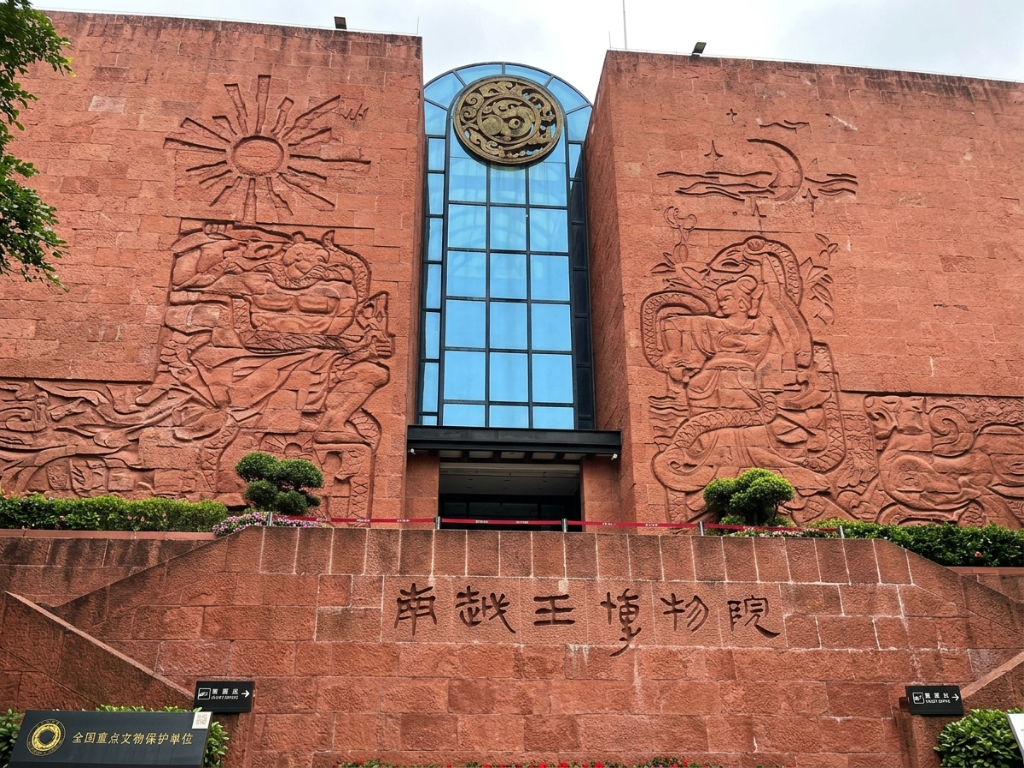
Overview
Honestly, when I first heard about a 2,000-year-old royal tomb sitting right in the middle of downtown Guangzhou, I thought someone was pulling my leg. But trust me, the Nanyue King Museum is the real deal, and it's hands-down one of the coolest archaeological spots I've ever stumbled upon. I remember walking in thinking I'd spend twenty minutes tops, and two hours later I was still wandering around with my jaw on the floor.
Here's the thing—this tomb was discovered completely by accident back in 1983 when construction workers were digging for a new building. Can you imagine hitting an ancient royal burial chamber instead of a foundation? The tomb belonged to Zhao Mo, the second king of the Nanyue Kingdom, and somehow it had stayed perfectly untouched for over two millennia. When I walked through those original underground chambers, I got goosebumps. You're literally walking through the exact same narrow corridors that were sealed 2,000 years ago.
If you're a history nerd like me, you'll love how this place proves that Guangzhou wasn't just some backwater trading post—it was the political and cultural heart of the entire Lingnan region. And unlike most museums where you're staring at artifacts through glass, here you get to descend into the actual tomb. It's damp, it's narrow, and honestly, it's a little eerie—but that's exactly what makes it unforgettable.
Essential Info
- Hours: 09:00 - 17:30 (Closed on Mondays)
- Tickets: 10 RMB
- Transport: Take Metro Line 2 to "Yuexiu Park Station" (Exit E is just a short walk away).
💡 Local Pro-Tip
Here's something I wish someone had told me before I went: bring a light jacket, seriously. The exhibition halls are absolutely freezing to protect all those ancient artifacts, and I spent the first half of my visit shivering. Also, don't rush the underground tomb section—it's damp, narrow, and honestly feels like stepping into an Indiana Jones movie. I almost skipped it because the main halls were so impressive, but trust me, walking through those original 2,000-year-old stone corridors is the highlight of the whole experience.
The Jade Burial Suit
Okay, let me tell you about the jade burial suit because I literally stood in front of it for fifteen minutes just trying to process what I was looking at. Picture this: 2,291 individual pieces of jade, each one hand-carved and polished, then sewn together with over a kilogram of gold thread to create what basically looks like a full-body suit of shimmering green armor. It was placed on King Zhao Mo's body because the ancients believed it would preserve him in the afterlife, and honestly, looking at it, I almost believed it could.
Here's what blew my mind—only royalty got this treatment. We're talking about months, maybe years, of painstaking craftsmanship by master artisans who shaped each jade piece to fit the human body like a second skin. When I learned that this discovery actually confirmed historical texts scholars had debated for centuries, I got that nerdy rush of excitement. You'll see it behind glass in the main exhibition hall, and trust me, you'll want to take your time with this one.
Tomb Architecture
I'm not gonna lie, walking through the actual tomb chambers gave me chills in the best possible way. The whole complex is built into a hillside and carved directly from solid bedrock—seven chambers connected by narrow corridors that follow ancient Chinese cosmological principles. Each chamber represents a different aspect of the afterlife, and you can feel the weight of that symbolism as you move through the space.
The engineers who built this thing over 2,000 years ago were way ahead of their time. The corridors are narrow and the air is damp and cool, which honestly just adds to the whole time-travel vibe. I remember touching the stone walls (gently, don't worry) and thinking about how the last people to walk here before tourists were the king's burial attendants. If you're even slightly claustrophobic, just be warned—the passages are tight, but they're totally worth it for that "I'm in an ancient tomb" adrenaline rush.
Key Artifacts
Honestly, the jade suit is just the headline act—there's so much more here that had me doing double-takes around every corner. Here's what you absolutely shouldn't miss:
- Royal Seals: These gold and jade seals are tiny but mighty. I kept thinking about how the king actually held these in his hands, pressing them into wax to seal official decrees.
- Ancient Weapons: The bronze swords and crossbows look like they could still do some damage. The craftsmanship on the armor had me wondering how many blacksmiths spent their entire lives perfecting this stuff.
- Ritual Vessels: These bronze implements were used in ancestor worship ceremonies, and you can see the wear patterns that prove they were actually used, not just decorative.
- Jade Artifacts: Beyond the burial suit, there are hundreds of other jade objects—pendants, discs, ornaments—that show how obsessed this culture was with the stuff. And honestly, after seeing them, I get it.
- Musical Instruments: The bronze bells and chimes blew my mind. Apparently this kingdom had a pretty sophisticated musical culture, which isn't something I expected from an ancient southern Chinese state.
Here's the thing that really got me—the museum has items from Persia, India, and Southeast Asia mixed in with all the local stuff. It really drives home that this wasn't some isolated kingdom; it was a legit cultural and commercial crossroads. I stood there looking at a Persian-style artifact and thought, "Wow, globalization isn't exactly new, is it?"
Cultural Significance
Before this tomb was discovered in 1983, historians were basically working from old texts and educated guesses about the Nanyue Kingdom. But when archaeologists opened this thing up, it was like finding the missing puzzle piece that proved everything. I'll be honest, I got a little emotional reading about how this one discovery completely rewrote what we know about southern Chinese history.
What really struck me was seeing proof of the Maritime Silk Road with my own eyes. You read about ancient trade routes in books, but then you stand in front of an artifact that traveled from Central Asia or India over 2,000 years ago, and suddenly history feels incredibly real and close. This kingdom wasn't some backwater—it was actively trading and exchanging ideas with civilizations across Asia. Honestly, it made me feel strangely connected to those ancient traders and travelers.
Exhibition Layout
The museum flows really well, and I appreciated that they basically hold your hand through the whole story. Here's how my visit went:
- Discovery Exhibition: This is where you learn about the 1983 construction site accident that started it all. I loved seeing the old photos of the excavation—those workers must have been shocked.
- Original Tomb: The main event. You'll actually descend into the real underground chambers, and trust me, it's every bit as atmospheric as it sounds.
- Artifact Exhibition: This is where the jade suit lives, along with all those bronze weapons, musical instruments, and royal seals I mentioned.
- Cultural Exchange Exhibition: My personal favorite section—this is where they showcase all the foreign artifacts and you really get a sense of how connected this ancient kingdom was.
- Conservation Lab: Honestly, I almost skipped this, but I'm glad I didn't. Watching the conservators work on ancient artifacts through glass is oddly mesmerizing.
Best Times to Visit
Morning (09:00-11:00): I'm not usually a morning person when I'm traveling, but trust me on this one. I got there right at opening and had the tomb chambers practically to myself for a solid half hour. By 11 AM, tour groups started rolling in and those narrow passages get cramped fast.
Weekdays: I visited on a Tuesday and it was perfect. My friend went on a Saturday and said the tomb corridors felt like a subway rush hour. If you can swing a weekday visit, you'll thank yourself.
Winter Months: Here's the thing—Guangzhou summers are brutal, and while most of the museum is air-conditioned, that underground tomb is naturally cool. I went in December and the temperature contrast between outside and the tomb was actually pleasant, not shocking.
Avoid Holidays: I made the mistake of visiting during a national holiday once at a different site, and never again. Those tomb passages are narrow enough as it is—imagine being packed in there with hundreds of other people. Just don't do it.
Practical Tips
- Light Jacket: I know I sound like a broken record, but seriously—bring a jacket. The artifact halls are freezing, and I learned this the hard way.
- Comfortable Shoes: Those tomb floors are uneven stone, and you'll be doing a fair bit of standing around reading exhibit labels. Leave the flip-flops at the hotel.
- Camera: Photography is allowed in most areas, just check the signs. I got some amazing shots in the tomb chambers, though the lighting is pretty moody so don't expect Instagram-bright photos.
- Time: I thought I'd be in and out in an hour, but I ended up staying nearly two and a half. There's just so much to absorb, and honestly, you'll want to take your time.
- Respect: Keep your voice down in the tomb chambers. It is an archaeological site, and honestly, the quiet just adds to the whole ancient-tomb atmosphere.
Nearby Attractions
You're in a seriously history-packed neighborhood here, so don't just hop back on the metro right away. I made a whole day of it and walked to these spots:
- Yuexiu Park: Just a short stroll away, and it's where you'll find that iconic Five Rams Sculpture that shows up on every Guangzhou postcard. Great place to decompress after the intensity of the tomb.
- Chen Clan Ancestral Hall: If you loved the craftsmanship in the Nanyue King Museum, this place will blow your mind. The traditional architecture and woodcarvings are absolutely next-level.
- Guangzhou Museum: Housed in the Zhenhai Tower inside Yuexiu Park. It's a nice complement to what you just learned about ancient Guangzhou.
- Beijing Road: When you're done with history and ready for dinner, this historic pedestrian street has tons of food options. I grabbed some amazing street food there after my museum day.