Shamian Island
Historic Walking District & Gateway to Authentic Xiguan Culture
Overview
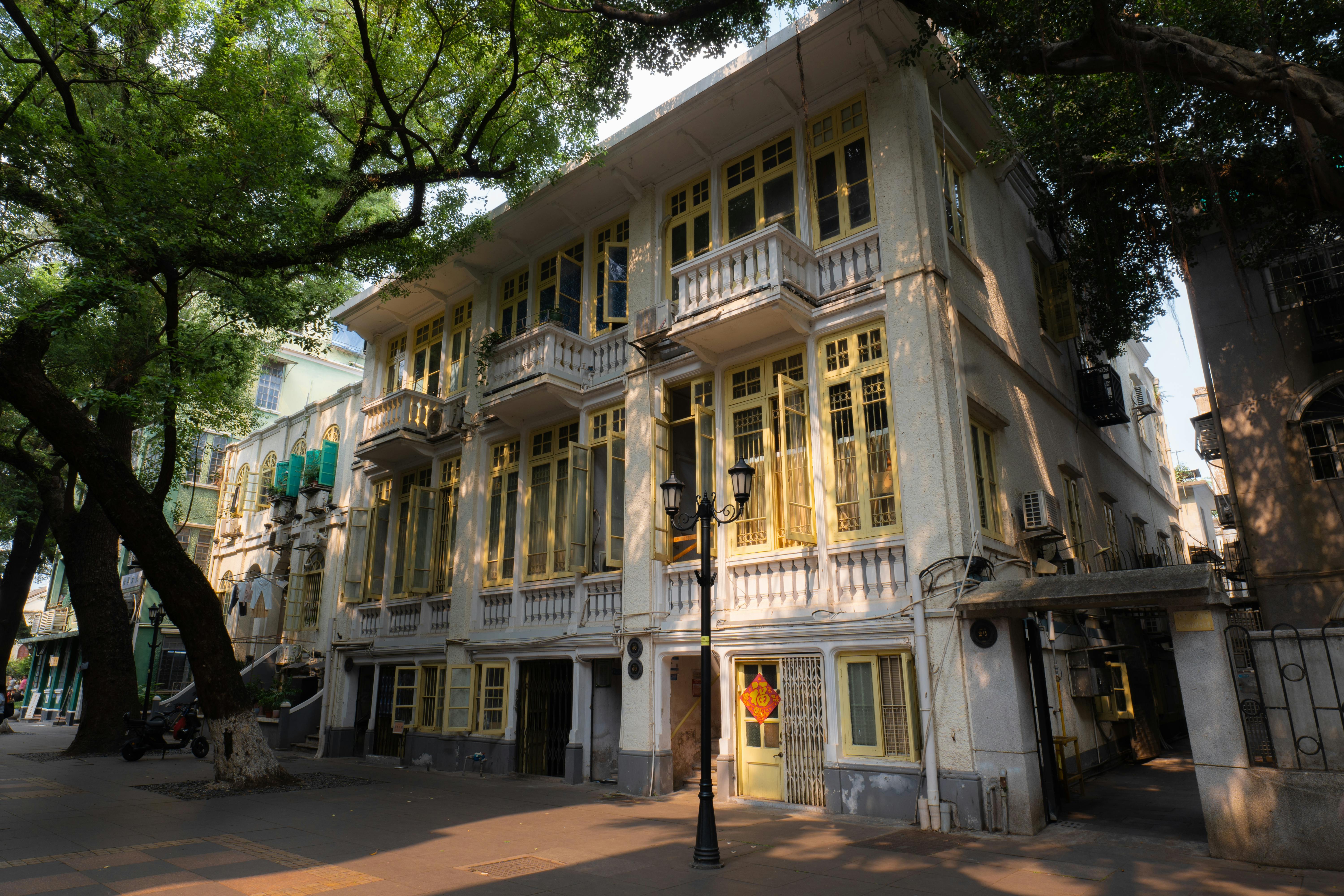
Honestly, Shamian Island is hands down one of my favorite spots in Guangzhou when I need a breather from the city's crazy pace. It's this tiny, pedestrian-only island where the trees form a natural canopy over the streets, and the whole vibe just instantly slows down. I stumbled upon it during my second trip to Guangzhou, and I've been going back every time since. You'll find these gorgeous old buildings everywhere, plus quirky little art galleries and riverside cafes where you can literally sit for hours watching the Pearl River drift by. It's like stepping into a completely different world from the rest of the city.
What really gets me about this place is how it wears its history so effortlessly. After the Opium Wars, this little sandbank became a foreign concession, and the British and French basically built their own mini-Europe here. Fast forward to today, and those same colonial buildings have been turned into art spaces, boutique shops, and some of the coziest cafes you'll find in Guangzhou. I remember walking down one of the tree-lined avenues for the first time and genuinely forgetting I was in one of China's biggest cities. The gardens are immaculate, the river breeze is real, and there's this peaceful energy that just makes you want to slow down and breathe.
If you're into photography like I am, bring an extra memory card—seriously. There's this magic hour right before sunset when the light hits those old facades through the trees, and everything turns golden. I once spent an entire afternoon just wandering around with my camera, discovering hidden courtyards and random art installations I never would've found if I was rushing. The island is small enough that you can cover it on foot without exhausting yourself, but trust me, you'll want to take your time. Whether you're a history nerd, an architecture geek, an art lover, or just someone who wants a killer cup of coffee in a beautiful setting, Shamian delivers.
Essential Info
- Hours: Open 24/7 (Shops and cafes usually open from 10:00 to 22:00)
- Tickets: Fully free to enter
- Transport: Take Metro Line 1 or Line 6 to "Huangsha Station" (Exit F), then walk across the pedestrian footbridge directly onto the island.
💡 Local Pro-Tip
Okay, here's the insider knowledge I wish someone had given me sooner: don't just bounce after you've seen the pretty colonial buildings. Walk about 15 minutes northeast from Shamian and you'll hit Enning Road (恩宁路) and Yongqing Fang (永庆坊)—and trust me, this is where the real magic happens. I randomly wandered into this area on my third visit and felt like I'd discovered a secret level in a video game. We're talking proper Cantonese arcade streets (Qilou骑楼) where the buildings have these covered walkways that shield you from sun and rain, little workshops where people are still making traditional copperware by hand, and actual locals going about their day—not tourist actors, not Instagram influencers, just real Guangzhou life. There's this tiny shop on Enning Road that sells handmade bamboo steamers, and the owner, this guy in his seventies, sat there and explained the whole craft to me for twenty minutes even though I didn't buy anything. That kind of interaction? You'll never get it on Shamian itself, as beautiful as the island is. My personal route: finish your coffee on Shamian around 3 PM, then wander over to Yongqing Fang for the late afternoon light hitting those old Qilou facades. Thank me later.
Historical Background
So here's the backstory, and it's pretty wild. Back in the mid-1800s after the Opium Wars, this tiny sandbank—Shamian literally means "sandy surface"—got carved up into British and French concessions. I've read the old accounts, and apparently the locals weren't even allowed to set foot here without special permission back then. The British took the western half, the French took the eastern half, and they both went to town building their churches, consulates, banks, and fancy residences. Walking around today, you can still totally feel that colonial DNA in the buildings—it's like a little slice of Europe got dropped into the middle of the Pearl River Delta.
After 1949, when the PRC was founded, the foreign concessions obviously got shut down, and Shamian went through this weird identity crisis for decades. It became everything from government offices to apartment blocks, and honestly, a lot of the buildings fell into pretty rough shape. I talked to a local uncle once who told me his family lived in one of the old colonial buildings during the 70s, and they had like ten families crammed into what was originally a single mansion. The real transformation started in the 1990s and 2000s when the city finally realized what a treasure they had here. The restoration they've done is honestly impressive—they've kept the original facades and character while turning the interiors into galleries, cafes, and hotels. It's one of those rare cases where heritage conservation actually worked out without turning the place into a cheesy theme park.
What to Explore
Sacred Heart Cathedral (Shishi Stone Church)
Okay, full disclosure: this church is absolutely stunning and I must have taken like fifty photos of it the first time I saw it. Built in 1863, it's this massive Gothic Revival structure with these dramatic pointed arches and actual rose windows that look like they were shipped straight from Europe. The twin spires are impossible to miss—they basically own the skyline here. Here's a little secret though: most tourists just snap a photo from the front and leave. Don't be that person. Walk around the sides and back, especially in the late afternoon when the sun hits the stone at an angle. The texture and shadows are incredible. It's still an active church, so if you're lucky you might catch the choir practicing, and the acoustics inside will give you chills.
Boutique Art Galleries
I'm not gonna pretend I'm some art expert, but even I can appreciate what they've done with these spaces. The galleries here are housed in these gorgeous repurposed colonial buildings, and there's something about seeing contemporary Chinese art in that setting that just works. I stumbled into one gallery—can't even remember the name, it had a tiny entrance—and found this exhibition about Guangzhou's urban transformation that honestly blew my mind. The artist had taken old photos of the city and painted over them with these vibrant, chaotic colors. A lot of the galleries here rotate their exhibitions pretty frequently, so even if you've been before, there's usually something new. My advice? Just wander in whenever a door is open. Most of them are free, and the gallery owners are usually happy to chat if they're not too busy.
Riverside Promenade
This is my go-to spot when I need to clear my head. The promenade runs along the Pearl River, and the views across to the modern Guangzhou skyline are genuinely surreal—you've got these 19th-century colonial buildings on one side, and then BAM, skyscrapers and LED lights on the other. There are benches everywhere, and I've spent more evenings than I care to admit just sitting there with a coffee, watching the river and the sunset. The breeze is legitimately refreshing, which is saying something in Guangzhou's humidity. If you're into people-watching, this is prime territory. You'll see everything from elderly locals doing tai chi at dawn to couples taking wedding photos at golden hour.
Café Culture
I have to dedicate an entire section to this because Shamian's café scene is genuinely dangerous for my wallet. There's this one spot—I think it's called something like "Time Out" or similar, honestly the name escapes me but you'll know it by the outdoor terrace under the banyan trees—where I had the best flat white of my life. The island is packed with these converted colonial buildings turned into coffee shops, and they all have this effortless charm that you can't fake. My personal favorite thing to do is grab a seat on one of the shaded terraces, order an iced coffee (trust me, you'll need the ice), and just watch the world go by. There's also a riverside bar that does surprisingly good craft cocktails after dark. Fair warning: the café prices here are a bit steeper than the rest of Guangzhou, but you're paying for the atmosphere, and honestly? It's worth every yuan.
Photography Tips
I'm going to be real with you—Shamian Island is basically a photographer's playground, but you need to time it right. I've made the mistake of showing up at noon before, and the harsh overhead light just flattens everything out and makes you sweat through your shirt. The real magic happens during golden hour, that window right after sunrise and just before sunset. The way the low sun hits those old colonial facades, carving out deep shadows and painting everything in these warm amber tones—it's honestly unreal. I have this one shot from around 5:30 PM, looking down one of the tree-lined avenues with the light filtering through the leaves, that I still use as my phone wallpaper.
The island is small enough that you can comfortably walk around with your camera gear without getting exhausted, but here's the thing—be cool about it. People actually live and work here, and nobody likes having a lens shoved in their face while they're trying to enjoy coffee. Most of those gorgeous interior courtyards are private property, so don't go hopping fences or sneaking into hotel lobbies uninvited. Stick to the public streets and promenades, and honestly, there's more than enough material there. I once spent forty-five minutes just photographing doorways. Doorways! Each one was completely different—different colors, different ironwork, different levels of peeling paint.
Gear-wise, if you have a wide-angle lens, definitely bring it. Those grand facades are hard to capture otherwise, especially when you're standing on narrow sidewalks. But honestly, my favorite shots from Shamian have been with a telephoto lens. There's something about compressing those long avenues and making the buildings stack up on each other that just looks so cinematic. And don't sleep on black and white—this place was made for it. The symmetry of the architecture, the texture of the old stone, the contrast between light and shadow... I've printed a few B&W shots from here and they look absolutely stunning framed. Oh, and one last thing: look up. Everyone looks straight ahead, but some of the best details—the cornices, the balcony railings, the old signage—are above eye level.
Best Time to Visit
Look, Guangzhou weather is no joke, so timing your visit to Shamian matters more than you'd think. I've been here in all four seasons, and here's my honest take: spring (March through May) and autumn (September to November) are the sweet spots. The humidity hasn't reached its full evil potential yet, and you can actually walk around without feeling like you're breathing through a wet blanket. Winter visits from December to February are actually pretty underrated—yeah, it's cooler and you might need a light jacket, but the island gets this quiet, almost melancholy vibe that's perfect if you're trying to escape the crowds and just think for a bit.
If you can swing it, weekday mornings are where it's at. I'm talking about getting there around 8 or 9 AM when the light is soft and the only other people around are elderly locals doing their morning walks. You'll basically have the place to yourself, and the photos come out so much cleaner without random tourists photobombing your shots. Weekends? Honestly, avoid them if possible, especially around lunchtime when every café is packed and you can't move without bumping into someone. But here's a plot twist: evening visits after 6 PM are absolutely magical and most people don't even think to come then. The historic buildings get all moody in the twilight, and across the river, the modern skyline starts lighting up with LEDs. That contrast—old colonial darkness on one side, neon futuristic glow on the other—is something else entirely. I did an evening stroll here once in late October, and it was probably my favorite visit out of all of them.