Temple of the Six Banyan Trees
Ancient Buddhist Sanctuary
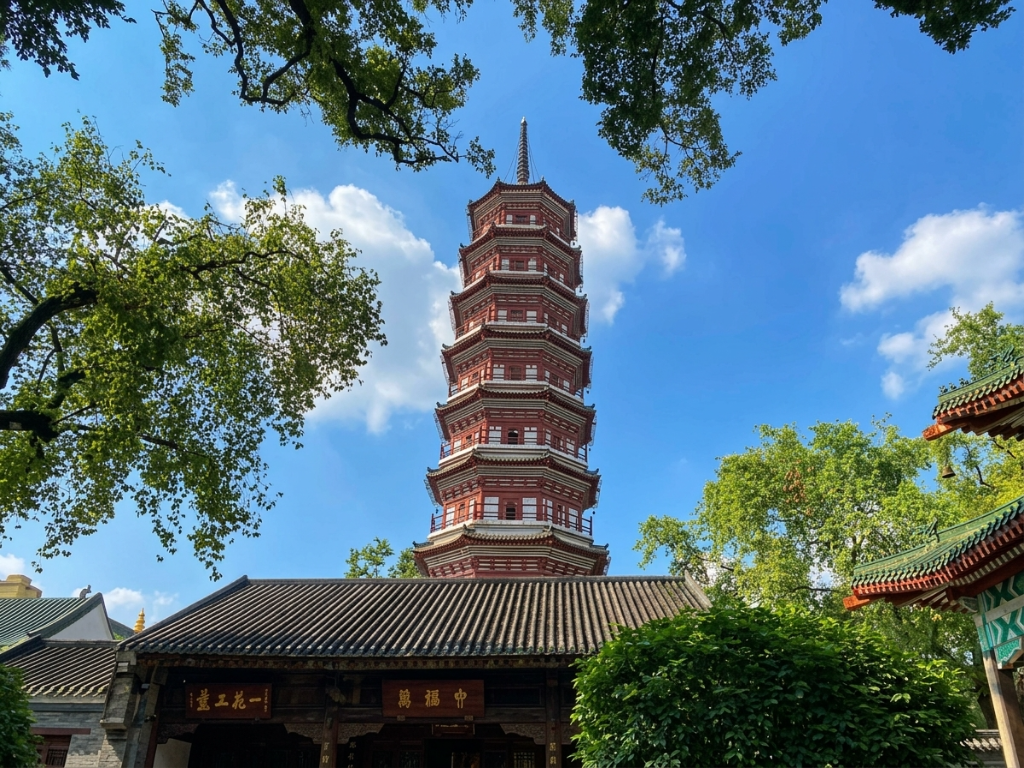
Overview: 1,400 Years of Spiritual Heritage
Walking into the Temple of the Six Banyan Trees (Liurong Si) for the first time, I immediately felt this sense of calm wash over me. And then I learned it was founded in 537 AD—over 1,400 years ago—and honestly, I got goosebumps. This place has survived dynasties, wars, natural disasters, you name it, and yet it still maintains this incredibly authentic spiritual atmosphere. It's not one of those temples that's become a pure tourist trap; there are actual resident monks here doing daily prayers and ceremonies, which makes the whole experience feel real rather than performative.
The absolute star of the show is the 17-story Flower Pagoda, also called the Six Banyan Pagoda, rising 57 meters into the sky. I spent way too long just circling it and looking up. Here's the wild part: its design actually allows it to sway slightly in strong winds. I know that sounds terrifying, but it's actually ancient engineering genius that's kept this thing standing for centuries. Each level has this incredibly refined brickwork that you can stare at for ages and still notice new details.
What I loved most was that this isn't just a museum piece—it's a living, breathing temple. I watched visitors quietly observing the monks, some respectfully participating in incense offerings, and the whole atmosphere was just so peaceful compared to the chaos of the city outside. The architecture follows all those classic Chinese design principles: symmetrical halls, those beautiful curved rooflines, and intricate wooden brackets supporting the eaves. Honestly, even if you're not religious or spiritual, there's something deeply moving about standing in a place that's been sacred for over a millennium.
Must-Do Experiences
Admire the Ancient Flower Pagoda
Unfortunately, you can't climb inside the pagoda anymore due to heritage preservation rules, but honestly? The exterior is more than enough. I spent a solid twenty minutes with my neck craned back, admiring those elegantly curved eaves and the intricate pillar brackets that have somehow survived centuries of typhoons and tropical storms. Pro tip: walk around to find the angle where you can frame the pagoda with the temple's golden roofs in the foreground. I must have taken fifty shots before I got one I was happy with, but it's totally worth it.
The Giant Bronze Buddhas
Step inside the Mahavira Hall (Daxiong Baodian) and prepare to feel very, very small. There are three massive bronze Buddha statues in there, cast way back in 1662 during the Qing Dynasty. Each one weighs several tons, and they're apparently the largest ancient copper statues in all of Guangdong Province. I'm not a particularly spiritual person, but standing in front of them, I felt this weird sense of calm and awe. There's something about their expressions—this immense tranquility that seems to fill the whole hall.
Discover the Temple's Poetic Origin
Here's a fun story: the temple wasn't originally called Six Banyan Trees. It was actually called Baozhuangyan. But in the 11th century, the famous poet Su Shi visited and was so moved by the six ancient banyan trees in the courtyard that he wrote the characters "Liu Rong" on a stone stele. The trees are long gone now, but the name stuck forever. I found that stele during my visit and just stood there thinking about how one poet's visit a thousand years ago determined what we'd all be calling this place today. History is wild like that.
Access & Tickets
The temple is kind of hidden away in this vibrant little neighborhood in Yuexiu District—and I mean hidden, I walked right past the entrance the first time. Your best bet is getting to Gongyuanqian Station (Lines 1 and 2) and taking Exit I. From there, it's about a 10-minute stroll through some really authentic local streets. I actually loved this part of the visit—just walking past tiny shops and old apartment buildings before suddenly arriving at this ancient temple.
🚇 Accurate Transport Guide for 240-Hour Visa-Free Travelers:
- From Airport: Take Line 3 (North Extension) to Jiahewanggang, then transfer to Line 2 to Gongyuanqian Station. Takes about 45 minutes total.
- From Canton Tower: Take Line 3 to Kecun Station, transfer to Line 8 to Changgang Station, then transfer to Line 2 to Gongyuanqian. It's a bit of a trek but totally manageable.
- From Beijing Road: Super easy—just one stop on Line 1 from Beijing Road to Gongyuanqian. Or if you're feeling it, it's a nice 20-minute walk west through some really local streets.
🚨 Local Pro-Tip
The entrance fee is basically nothing—just ¥5 RMB—and you can pay by scanning a WeChat or Alipay QR code at the gate. Here's the thing though: the temple doesn't close for lunch, which is great because I went around noon and it was blissfully quiet. Most tourists were off eating somewhere, so I had the place almost to myself. Oh, and please, please don't use flash photography inside the main halls. I saw someone do it and the monks gave them this look that could've melted steel. Just be respectful, keep your voice down, and soak in the atmosphere.
Best Time to Visit
Morning (8:30-10:30 AM) is when this place really shines. I'm not usually an early riser on vacation, but I dragged myself out of bed for this and it paid off big time. The morning light hits those golden roof tiles in this absolutely gorgeous way, and the temperature is still comfortable before the midday heat kicks in. Weekday mornings are especially peaceful—weekends bring in more local worshippers and tourists, which is still nice but definitely busier.
Nearby Attractions
You're right in the historic heart of Guangzhou here, so it would be a crime not to explore the neighborhood:
- Guangxiao Temple (光孝寺): Just a 5-minute walk west, and locals say "Before there was Guangzhou, there was Guangxiao Temple." I visited both temples in one morning and it was the perfect pairing—two completely different vibes but equally powerful.
- Beijing Road Pedestrian Street: About a 20-minute walk east. After all that spiritual contemplation, I was starving and this place delivered with tons of food options.
- People's Park: Right above Gongyuanqian metro station. I stopped here on my way back and spent a pleasant half hour watching locals play traditional chess and sing Cantonese opera. It's like free entertainment and a cultural lesson rolled into one.