Yongqing Fang
Authentic Xiguan Culture & Intangible Heritage
Overview
Yongqing Fang is the kind of place that makes you slow down without even realizing it. Located in the historic Enning Road district, this beautifully revitalized neighborhood feels like the living, breathing heart of old Guangzhou. I'm talking incredibly preserved Xiguan Qilou (those gorgeous arcade buildings), ancestral halls that still feel sacred, and the absolutely stunning Cantonese Opera Art Museum. It's this perfect blend of ancient cultural heritage and modern artisan boutiques, with traditional tea houses tucked around every corner. I walked in planning to spend an hour and left three hours later, completely enchanted.
What really struck me about Yongqing Fang is that it doesn't feel like a museum piece. Yeah, it's been beautifully restored, but it's also a real community where actual locals live their traditional way of life while embracing modern conveniences. I watched an elderly man practicing calligraphy in a courtyard while a young barista brewed specialty coffee twenty feet away. The narrow alleyways, restored brick buildings, and traditional courtyards genuinely transport you back to Guangzhou's golden age as a trading port. It's nostalgic without being fake, vibrant without being chaotic.
The name "Yongqing" (永庆) means "eternal celebration," which I learned from a shop owner who proudly told me about the area's history as a cultural and commercial hub. Today, that celebratory spirit is still alive—traditional arts and crafts are preserved and shared, and there's this beautiful sense that you're witnessing living culture rather than staged performances. The mix of old and new creates an atmosphere I haven't found anywhere else in Guangzhou.
Essential Info
- Hours: The public alleyways are open 24/7, but most shops and the museums operate from 09:00 to 21:00.
- Tickets: Fully free to enter and explore.
- Transport: Take Metro Line 1 to "Huangsha Station" (Exit B) or "Changshou Lu Station", followed by a short, highly scenic walk through the old residential town.
💡 Local Pro-Tip
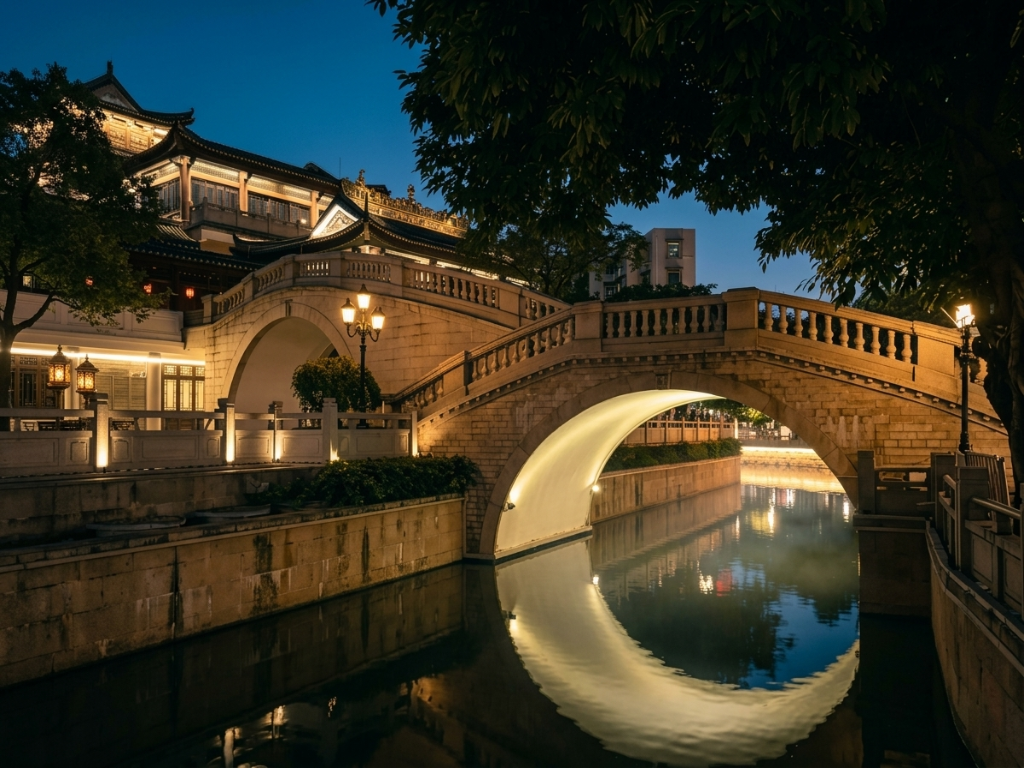
Here's my honest recommendation: come in the late afternoon and stay into the evening. I'm not usually one for "magical atmosphere" descriptions, but when those traditional red lanterns flicker on and the warm lights hit the old Qilou streets and central lake... yeah, it's pretty magical. I actually gasped when I turned a corner and saw the whole alleyway glowing. And whatever you do, find a local dessert shop in the alleys and order the traditional Cantonese double-skin milk (Shuang Pi Nai). I stumbled upon this tiny place with three tables and had what might be the best dessert of my life. No exaggeration.
Xiguan Qilou Architecture
The Qilou buildings are what make Yongqing Fang visually unforgettable. These traditional arcade-style structures have covered walkways on the ground floor that create these beautiful sheltered corridors. I learned from a local that this style originated in Guangzhou in the late 19th and early 20th centuries, and honestly, it's genius. Practical AND beautiful—my favorite combination.
Here's what I love about the design: those covered walkways protect you from rain and sun (which, in Guangzhou, is crucial), while the shops can display their goods right at street level. But look up and you'll see the real artistry—intricate wooden carvings, colorful ceramic decorations, and these distinctive cantilevered structures that seem to defy gravity. A shop owner told me these buildings represent how old Guangzhou worked: business and daily life weren't separate, they were completely intertwined. You can feel that energy even today.
What's impressive is how they've restored these buildings while keeping them functional. I sipped tea in a traditional tea house, browsed a craft shop, and peeked into an art gallery—all housed in these historic structures. There's even a boutique hotel tucked in there. It never feels forced or theme-parky. It just feels like a neighborhood that happens to be gorgeous.
Cantonese Opera Art Museum
I almost skipped this museum because I thought, "How interesting can an opera museum be?" Turns out, VERY interesting. Housed in a beautifully restored historic building, this place showcases Cantonese opera, which is way more fascinating than I expected. The exhibits include these incredibly elaborate costumes, traditional musical instruments I'd never seen before, props, and multimedia displays that actually made me understand why this art form has survived for centuries.
Here's the thing that made my visit special: they sometimes host live performances, especially on weekends and during cultural festivals. I got lucky and caught a short performance, and honestly, it was mesmerizing. The singing style is so distinctive, the costumes are beyond elaborate, and the storytelling is dramatic in the best way. The intimate setting of the museum makes it feel like you're part of something special, not just watching a show. Check their schedule when you arrive—if there's a performance happening, clear your plans.
Traditional Crafts & Artisans
One of my favorite things about Yongqing Fang is that it's basically an open-air craft market where people are still doing things the old way. I spent an embarrassing amount of time just watching artisans work. Here's what you'll find:
- Ceramics: Traditional Cantonese porcelain and pottery being shaped and painted right in front of you. I watched a woman paint delicate floral patterns on a vase for twenty minutes and it looked effortless, though I'm sure it took years to master.
- Woodcarving: Intricate decorative carvings that go into furniture and building details. The precision is honestly mind-boggling.
- Embroidery: Fine Cantonese embroidery with colors so vibrant they almost glow. I bought a small piece that I'm now terrified to frame because I don't want to damage it.
- Paper-cutting: Traditional paper art with designs so intricate I can't even comprehend how they do it with just scissors and paper.
- Calligraphy: Traditional Chinese brush painting and writing. I tried it once at a workshop and let's just say... I won't be quitting my day job. But it was fun!
Many workshops offer demonstrations, and some even let you try the crafts yourself. The shops sell authentic, high-quality pieces that actually make meaningful souvenirs. I usually hate tourist shopping, but the stuff here is the real deal. I came home with a hand-painted ceramic cup that I use every morning and it still makes me smile.
Tea Culture Experience
I'm going to be honest with you: before visiting Yongqing Fang, I was a coffee person. But after spending an afternoon in one of the traditional tea houses here, I'm at least a tea-curious person now. Tea isn't just a drink in Lingnan culture—it's basically a way of life. The tea houses in Yongqing Fang range from simple, rustic spots where locals gather to more formal venues that do these elaborate ceremonies. I tried both and loved them for completely different reasons.
What I found fascinating was learning how Guangzhou's history as a major tea trading port shaped everything about the local tea culture. The staff at the tea house I visited were incredibly patient and taught me about different brewing methods, varieties like Phoenix Dancong oolong and Yingde black tea, and why tea is so deeply significant in Chinese society. I left with a small bag of tea and a new appreciation for something I'd never really thought about before. That's the kind of unexpected gift Yongqing Fang gives you.
Best Times to Visit
Late Afternoon to Evening (17:00-20:00): I've said it before and I'll say it again—this is THE time to visit. When those lanterns light up and the warm glow hits the narrow streets and water features, the whole place transforms. I took about a hundred photos during this golden window and they all look like postcards.
Weekdays: If you want to explore the alleyways and shops without fighting through crowds, come on a weekday. I visited on a Tuesday afternoon and had whole sections to myself. It felt like the neighborhood was letting me in on a secret.
Weekends: More energy, more cultural performances, more activities—but yeah, more people too. I did both a weekday and weekend visit, and they felt like completely different experiences. Both great, just depends on what mood you're in.
Festivals: During Chinese New Year, Mid-Autumn Festival, and Dragon Boat Festival, this place apparently goes absolutely wild with special decorations, performances, and activities. I haven't experienced it yet, but a local shop owner showed me photos from last year's Mid-Autumn Festival and honestly? I'm planning my next trip around it.
Nearby Attractions
Yongqing Fang sits in a larger historic district, so you're surrounded by other amazing spots:
- Enning Road (恩宁路): The main historic street with even more Qilou buildings and traditional shops. I walked the whole length and found some of my favorite snacks here.
- Shamian Island: Just a short walk away, and the contrast is incredible. You go from traditional Lingnan to colonial European architecture in minutes. I did both in one afternoon and got serious whiplash—in the best way.
- Chen Clan Ancestral Hall: A bit north, and if you haven't been yet, go. The traditional architecture there complements what you'll see in Yongqing Fang perfectly.
- Liwan Museum: Nearby and worth a visit if you want deeper context on the district's history. I popped in for a quick look and ended up staying an hour.
Practical Tips for Visitors
- Comfortable Shoes: Those narrow alleyways and uneven surfaces are charming but not heel-friendly. I wore sneakers and was very grateful for that decision.
- Camera: You'll want it. The architecture and atmosphere are incredibly photogenic. I drained my phone battery twice in one visit.
- Cash: Most larger places take mobile payments, but the smaller vendors and some of the best food stalls prefer cash. I learned this when I found the perfect souvenir and had to run to an ATM.
- Respect: Remember that real people live here. I tried to keep my voice down in the residential areas, especially in the early morning when people might still be resting.
- Language: Many shop owners speak at least some English, but learning a few basic Chinese phrases goes a long way. I learned "thank you" and "how much" and the smiles I got in return were worth the effort.